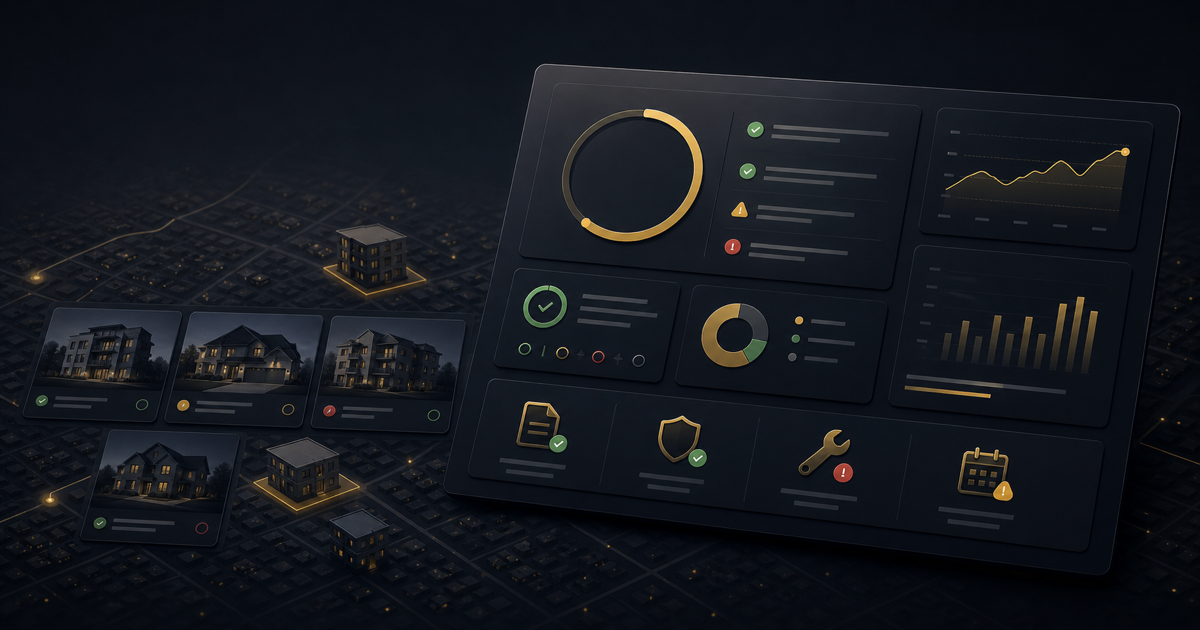
A rental property maintenance checklist is useful until you own enough doors that the checklist becomes another thing you have to manage. HVAC filters, lease expirations, PM invoices, inspection dates, insurance renewals, missing rent, loan resets, tax categories. It all matters. The problem is that none of it lives in one place.
That is why the better question is not "Do I have a checklist?" It is "Which property needs attention this week?"
Most landlords using property managers do not need another PDF. They need a live property health score that turns documents, transactions, PM statements, inspection reports, insurance policies, and loan records into a clear owner side signal.
A Checklist Tells You What to Check. A Health Score Tells You What Changed.
Traditional maintenance checklists are built around tasks. Check the roof. Test smoke detectors. Service HVAC. Look for leaks. Review open work orders. Those are good habits, but they are not enough when you have 5, 10, or 20 doors across multiple markets.
The problem is priority.
If one property has an insurance renewal in 45 days, another has a Section 8 inspection coming up, another has a missing HAP payment, and another just posted two plumbing invoices in one week, which one gets your attention first?
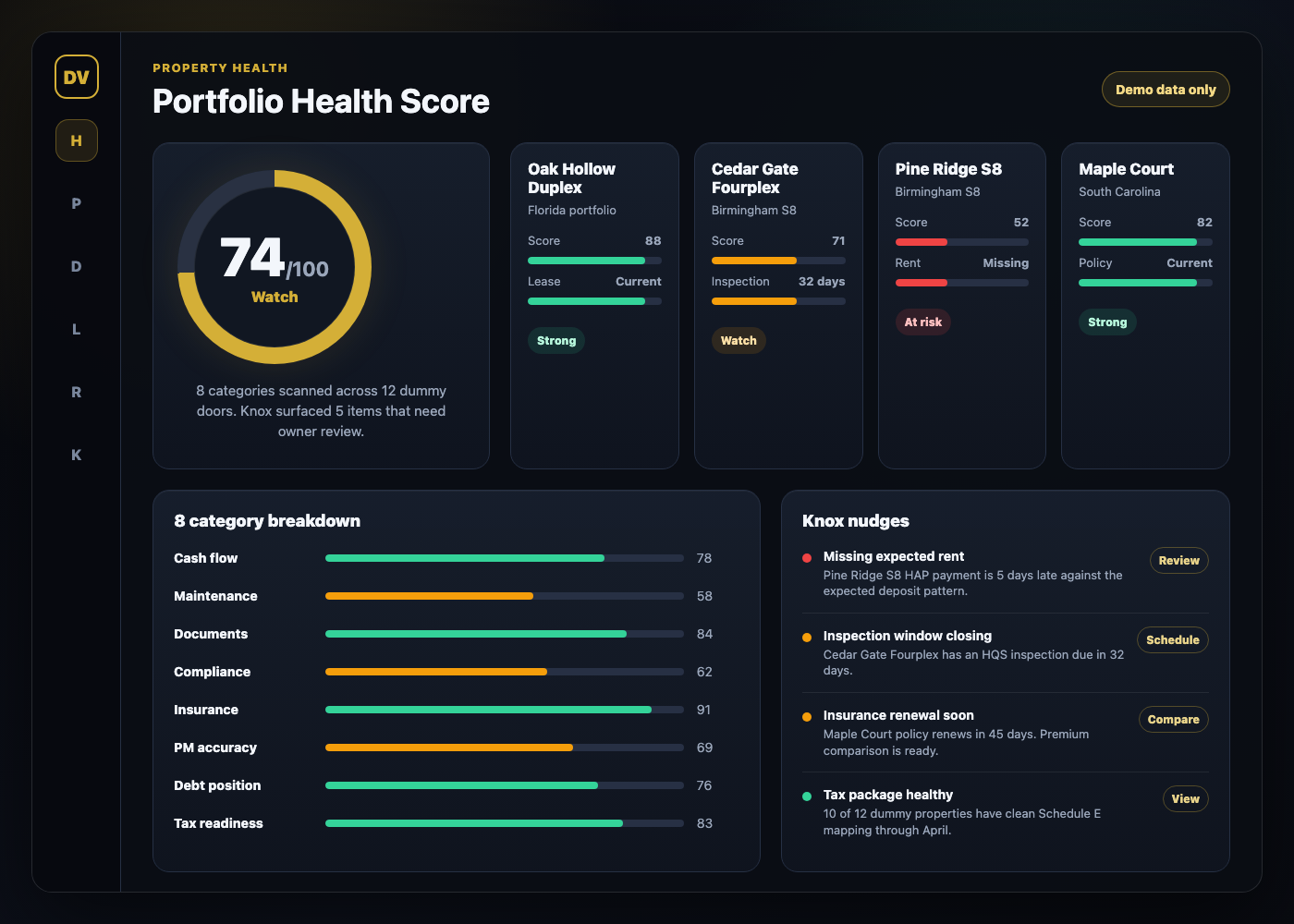
DoorVault's Property Health Scores answer that question across 8 categories: cash flow, maintenance, documents, compliance, insurance, PM accuracy, debt position, and tax readiness. Instead of staring at a static list, you see which property is strong, which one is on watch, and which one is at risk.
The 8 Signals Every Passive Landlord Should Watch
A rental property can look fine from the outside and still be drifting in the numbers. The health score exists because the warning signs usually show up before the big expense does.
- Cash flow: Is rent arriving when expected? Are PM disbursements matching the statement? Is NOI moving the wrong direction?
- Maintenance: Are repairs spiking relative to that property's history? Is the same vendor showing up too often? Is one system starting to fail in chapters?
- Documents: Are leases, insurance policies, inspection reports, mortgage statements, and invoices filed to the right property?
- Compliance: Are Section 8 vouchers, HAP contracts, HQS inspection dates, and FMR limits current?
- Insurance: Is coverage active? Did the premium jump? Is the renewal date close enough that you should shop it now?
- PM accuracy: Are fees matching the agreement? Are repairs itemized? Are deposits matching the bank feed?
- Debt position: Are loan balances current? Is the property inside a refinance window? Did escrow change?
- Tax readiness: Are transactions mapped to the right Schedule E categories before year end?
That is the owner side of property management. Your PM handles tenants and repairs. You still need to know whether the asset is healthy.
How Knox Turns Documents Into Owner Signals
Knox Intelligence is AI that proposes, learns, and never touches your data without permission. It powers the health score by reading the paperwork that already flows through your rental business.
Forward any property related email to your Knox inbox, upload a file, or sync a cloud folder. Knox reads 72 plus document types, including PM statements, insurance declarations, tax bills, inspection reports, leases, mortgage statements, invoices, closing disclosures, and HAP documents.
Then it extracts the fields that matter. A PM statement updates income, fees, repairs, and disbursements. An insurance declaration updates premium, coverage, deductible, and renewal date. A mortgage statement updates balance, principal, interest, tax escrow, and insurance escrow. A Section 8 inspection report updates compliance status and deadlines.
With Trust Knox OFF, Knox proposes those updates and waits for approval. With Trust Knox ON, routine updates apply instantly. Either way, the Activity Log records every change with a before and after snapshot, and any single field can be reverted.
Still using a checklist that waits for you to remember every detail? There is a better way. → https://doorvault.app
The Score Is Only Useful If It Points to Action
A health score should never be a vanity metric. If a property drops from 78 to 74, you need to know why.
DoorVault shows the reason behind the score change. Maybe cash flow slipped because one expected rent payment is missing. Maybe maintenance dropped because a property posted two repair invoices above its normal pattern. Maybe compliance improved because Knox found the missing inspection report and filed it to the right property.
The point is not to make you stare at charts. The point is to make the next action obvious.
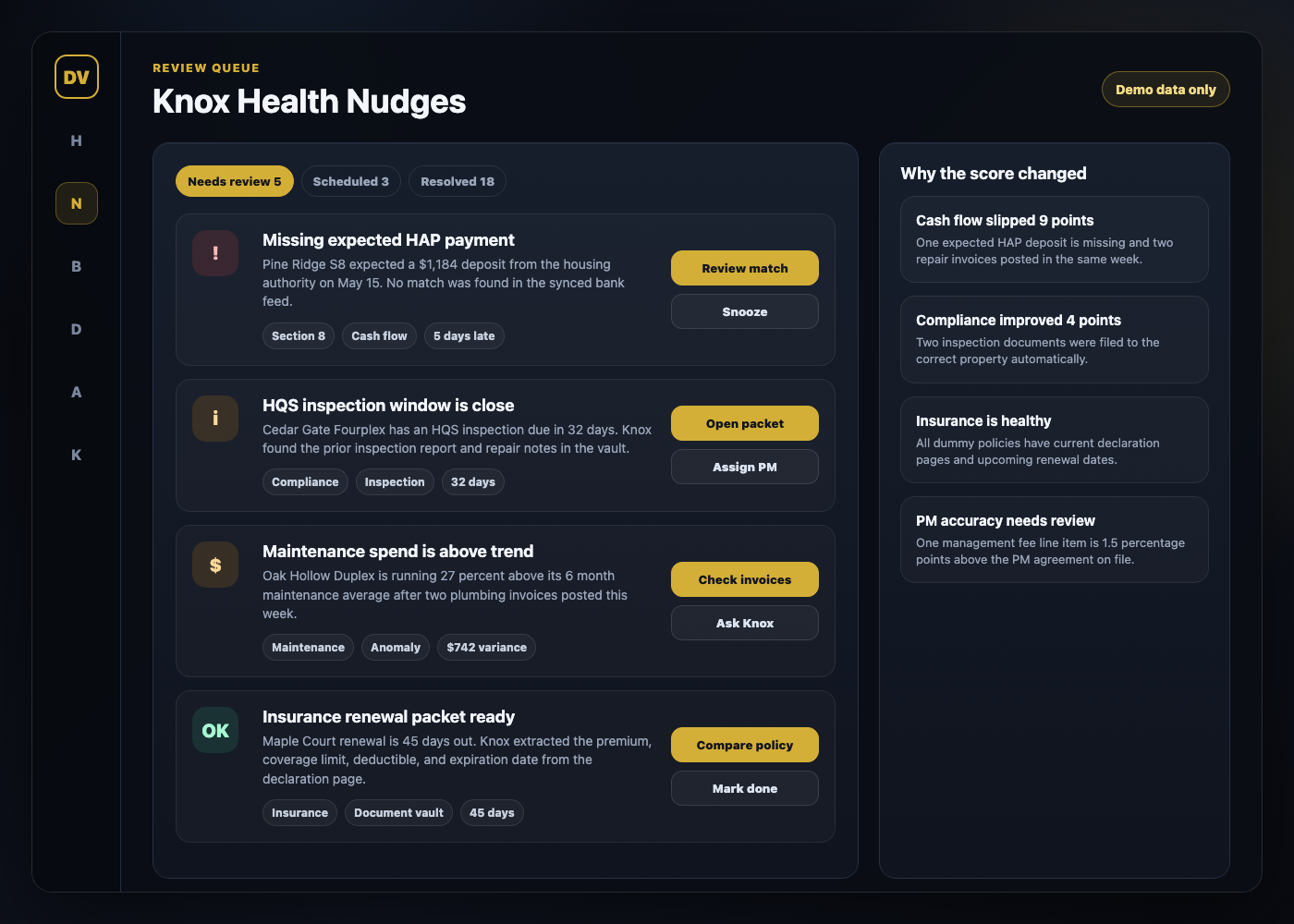
On a 10 door portfolio across multiple states, this matters fast. One HAP payment delay, one PM fee drift, one insurance renewal, one loan escrow change, and one missing lease document can all happen in the same week. In a spreadsheet, those are five separate problems hiding in five different places. In DoorVault, they become one review queue.
This Is Bigger Than Maintenance
Maintenance is the hook because every landlord understands it. But property health is broader than repairs.
A strong property is current on documents, clean on PM reporting, accurate on cash flow, ready for tax season, properly insured, and clear on debt position. That is why DoorVault connects Property Health Scores to the wider platform: Portfolio Dashboard, PM Report Card, Document Vault, Reports Hub, Loans Dashboard, Equity Tracker, Schedule E export, CPA Portal, Insurance Broker Portal, and Section 8 compliance tracking.
This is the part most tools miss. They give you one slice of the problem. A reminder app tracks tasks. A PM portal tracks work orders. A bookkeeping tool tracks transactions. DoorVault connects all of it because the owner decision depends on all of it.
If your insurance premium jumped 28 percent, that is not just an insurance issue. It hits cash flow. It changes your P&L. It may affect refinance math. It should be visible before renewal, not discovered during tax prep.
Ask These 3 Questions About Your Current System
If you want to know whether your maintenance checklist is enough, answer these three questions without opening five apps.
Can you tell which property has the weakest health score right now?
Can you explain why that score changed this month?
Can you see the exact owner action needed, with the source document attached?
If the answer is no, your checklist is not the problem. Your visibility system is.
DoorVault was built for landlords who use property managers but still need to manage the investor side. Knox reads the paperwork, updates the dashboard, flags the issues, and keeps the full portfolio view current. You only look at your data when you want to, not because the back office is falling apart.
Start free. 2 properties. No credit card. → https://doorvault.app