
Firing a property manager is not done when the notice is sent.
That is the polite part.
The hard part is getting the asset record back before portal access changes, memories fade, security deposits move, open repairs become folklore, and the final owner statement arrives with one line that says adjustment.
Adjustment. Very calming. Nothing says owner control like a word that can mean seven different things and none of them come with an invoice.
A property manager termination checklist should start with the contract notice, yes. Follow the agreement. Follow local rules. Use the notice method the contract requires. If the agreement says 30 days, 60 days, certified mail, email notice, or a specific address, do that part cleanly.
But do not confuse terminating the relationship with recovering the records.
The manager handled operations. The asset record still belongs to you.
Notice is not the finish line
Most owners focus on the termination letter.
That makes sense. It feels official. It creates a date. It says the relationship is ending.
But the date is only useful if it triggers a real handoff. You need the final statement period, the final owner draw, the tenant files, the deposit accounting, and the open issue list tied to the same cutoff date.
Otherwise, the old manager is gone, the new manager is guessing, and you are back in the inbox asking for a missing ledger from 47 days ago.
Great hobby. Terrible asset management system.
Your checklist should name the effective date, the final statement period, where remaining owner funds should go, where tenant deposits should go, who gets future rent, who gets tenant notices, and where every record should be delivered.
Then the important part starts: verification.
The 9 records to get back
Use this as the owner record checklist when switching managers or taking the property back yourself.
-
Current leases and amendments. Get fully signed copies for every active tenant, including renewals, addenda, pets, parking, utilities, and any special terms.
-
Tenant ledger. You need charges, payments, credits, late fees, deposits, concessions, balances, and unapplied cash through the handoff date.
-
Security deposit accounting. Get the amount held for each tenant, where it is being transferred, when it moved, and what notice was sent to the tenant.
-
Final owner statement. This should cover the last statement period through the termination date and show rent, fees, repairs, reserves, owner contributions, and final payout.
-
Final owner payout proof. The statement should connect to the bank deposit or transfer amount. If it does not match, you need the explanation before the file closes.
-
Open work orders and invoices. Ask for active repairs, completed work not yet billed, approved work not yet started, vendor invoices, warranties, photos, and insurance claim notes.
-
Vendor and utility records. You need recurring vendors, emergency contacts, utility accounts, recurring service dates, warranties, and any access instructions.
-
Keys, codes, remotes, and portal access. Physical access and digital access both matter. Garage remotes, mailbox keys, lock codes, alarm codes, gate passes, and tenant portal changes should be tracked.
-
Notice and communication history. Get tenant notices, lease violation history, renewal conversations, rent increase history, complaint history, and any pending legal or compliance items.
That is the checklist.
Not vibes. Not a portal screenshot. Records.
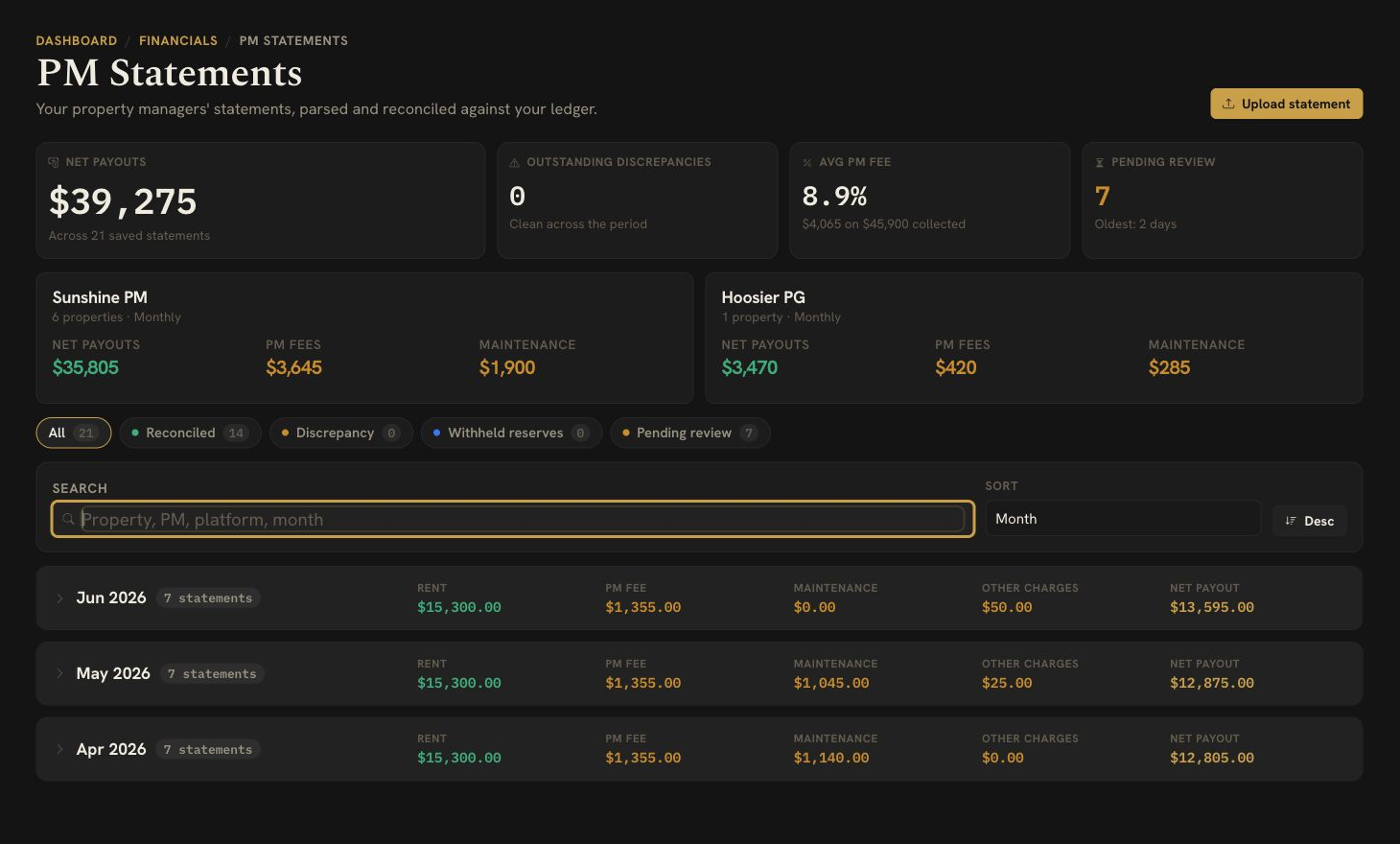
DoorVault keeps PM statements visible by month, manager, rent collected, PM fee, maintenance, other charges, and net payout, so the handoff does not depend on one exported PDF.
The final statement has to match the bank
The final statement is where many owner handoffs get soft.
The old manager sends a closing statement. The owner sees a net payout. The bank shows a deposit. The numbers are close enough to feel annoying but not dramatic enough to investigate immediately.
That is exactly how small leaks become permanent.
If the final statement says the owner draw is 3,840 and the bank deposit is 3,615, the difference might be a reserve holdback, a repair invoice, a management fee true up, a tenant credit, an owner contribution reversal, or an error.
Those are six very different answers.
The property manager termination checklist should force the matching test while the manager is still responsive. Ask for the final owner ledger, the final trust or operating account activity that supports your property, and the exact payout date and amount.
The goal is not to play detective forever.
The goal is to close the month once.
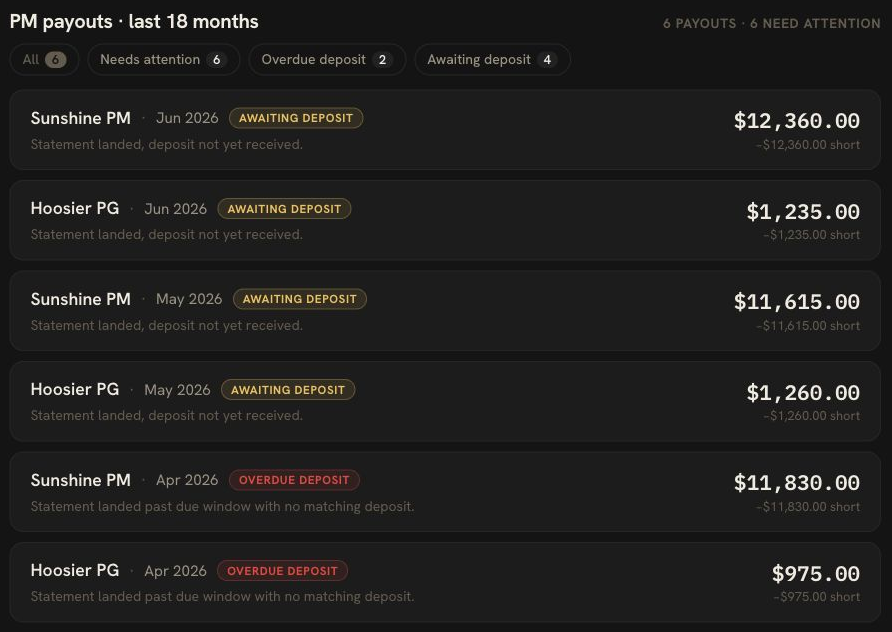
DoorVault keeps expected PM payouts and bank deposit status in one place, so final draw questions stay attached to the property instead of floating around in email.
The portal is not your archive
Owner portals are useful until they are not.
Access changes. Managers migrate systems. Files get renamed. Old statements disappear behind inactive accounts. The new manager does not have the old portal login. The tenant ledger exports in a format your tax folder never saw before.
Lovely little museum of almost having the record.
Before the termination date, export what matters and store it outside the manager portal. That means leases, ledgers, statements, invoices, insurance records, inspection reports, deposit accounting, notices, photos, work orders, and year end files.
Keep the files tied to the property, not just dropped into a folder named old PM.
That detail matters later. When a CPA asks why repairs jumped in April, you should not be opening three portals and a search bar with the emotional stability of a slot machine.
You should be able to open the property record and see the month.
DoorVault keeps the handoff under owner control
DoorVault is built for investors who use property managers but still want owner control.
PM Statement Processing reads owner statements, saves the file to the right property, and pulls out rent, PM fees, repairs, reserves, and payout amounts. PM vs Bank Reconciliation compares the expected owner payout to the bank deposit, so a final draw mismatch becomes a current question instead of next year paperwork.
Property Manager Tracking keeps the manager company, contact, fee structure, repair threshold, contract dates, and portal link attached to the asset. The PM Report Card keeps manager performance visible across properties. DoorVault Connect can receive manager emails and documents without turning your inbox into the operating system.
Then the broader record stays intact. The Document Vault holds leases, invoices, insurance, notices, entity files, loan records, closing files, and tax documents. The Action Center keeps open owner decisions visible. Reports Hub and Schedule E exports work better when the final PM data is already clean. Loan tracking, equity tracking, activity history, and Knox portfolio checks keep the handoff from becoming a dead folder.
The property manager can stop managing the property.
Your proof should not stop with them.
FAQ
What should I request when terminating a property manager?
Request current leases, tenant ledgers, security deposit accounting, final owner statement, final payout proof, open work orders, vendor records, keys and access codes, and tenant notice history.
How long does it take to terminate a property management agreement?
Your signed agreement and local rules control the timeline. Many contracts use a 30 to 90 day notice window, but the record handoff should be scheduled before the effective termination date.
What is the biggest risk when switching property managers?
The biggest risk is losing the operating record during the transition. Missing ledgers, deposit accounting, invoices, open repairs, and final payout proof create expensive confusion later.
How does DoorVault help after I fire a property manager?
DoorVault keeps PM statements, bank deposits, documents, manager details, reports, tax files, loans, equity records, and open owner decisions attached to the property after the manager relationship changes.
Before you fire the PM, get the records back.
Then keep the asset record where you control it.
See Knox turn PM statements, deposits, leases, invoices, reports, loans, taxes, and owner decisions into one property record in 30 seconds at https://doorvault.app