
Property one lives in your head.
Property two lives in a spreadsheet that already needs instructions.
Door 3 is where the spreadsheet starts lying politely.
That is the real answer to how to scale a rental property portfolio. It is not “buy more doors.” It is prove the first two doors are telling the truth before you add another set of statements, deposits, loan records, insurance renewals, tax categories, and PM decisions to the pile.
Your property manager can run the property. You still own the asset record.
How to scale a rental property portfolio starts with the record
Scaling starts when your numbers survive contact with a second source.
The PM statement says rent was collected. The bank says money landed. The invoice says why $475 left the account. The loan statement says how much principal moved. The insurance renewal says your monthly cost changed. Your Schedule E file says what the year will look like in March.
If those records agree, you have a portfolio.
If they do not, you have multiple opinions about your money.
That difference matters before door 3. A $1,850 rent line can look fine until the PM payout is short, the repair invoice is missing, and the spreadsheet still assumes last year’s insurance premium. The cash flow number may not be wrong on purpose. It is worse than that. It is stale.
Most scaling advice jumps straight to financing. DSCR loans. HELOCs. Cash out refis. Private lenders. Fine. Money matters.
But borrowed money magnifies bad records. It does not fix them.
The property manager does not own your numbers
A good PM removes tenant calls, showings, maintenance coordination, local inspections, rent reminders, and lease paperwork.
Beautiful. That is why you hired them.
But the PM’s system was built for the PM. It was not built to answer the owner question that shows up when you are deciding whether to buy the next property.
Which door is producing real NOI?
Which manager is slow to deposit?
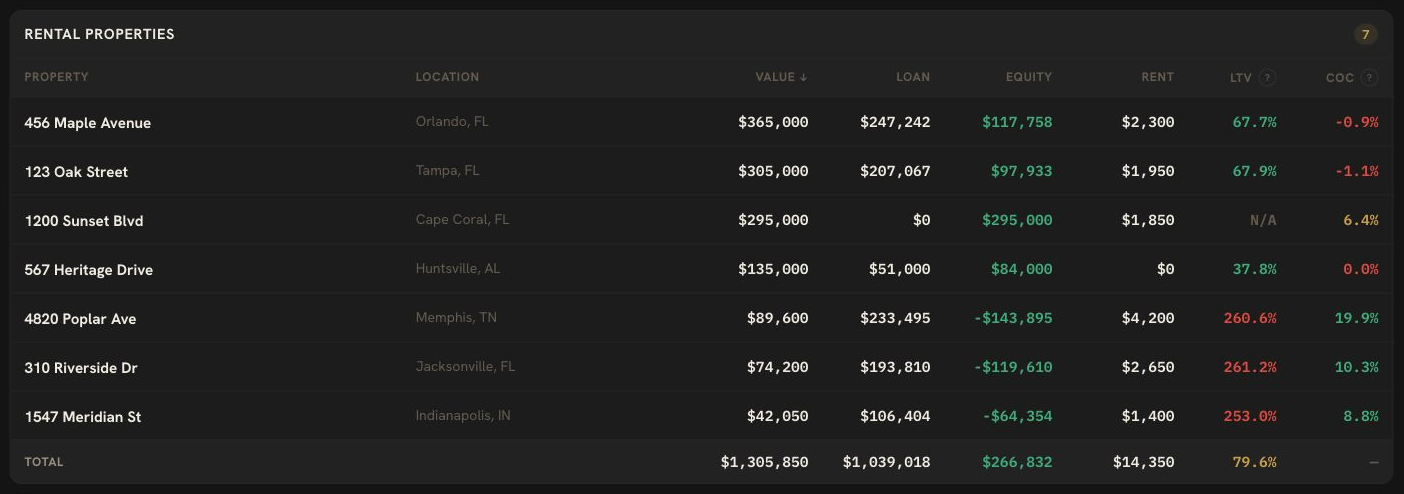
Which property has equity but no cash flow?
Which insurance renewal quietly changed the math?
Which repair charge needs the invoice before you accept it?
The owner portal may show a statement. It may show a rent roll. It may even show a nice report.
That report is still one witness.
The bank is another witness. The loan record is another. The document vault is another. Tax prep is another. Door 3 is where those witnesses need to sit in the same room.
Yeah, thrilling stuff. Exactly where the money hides.
Door 3 needs six records to agree
Before the next offer, six records should agree across the first two properties.
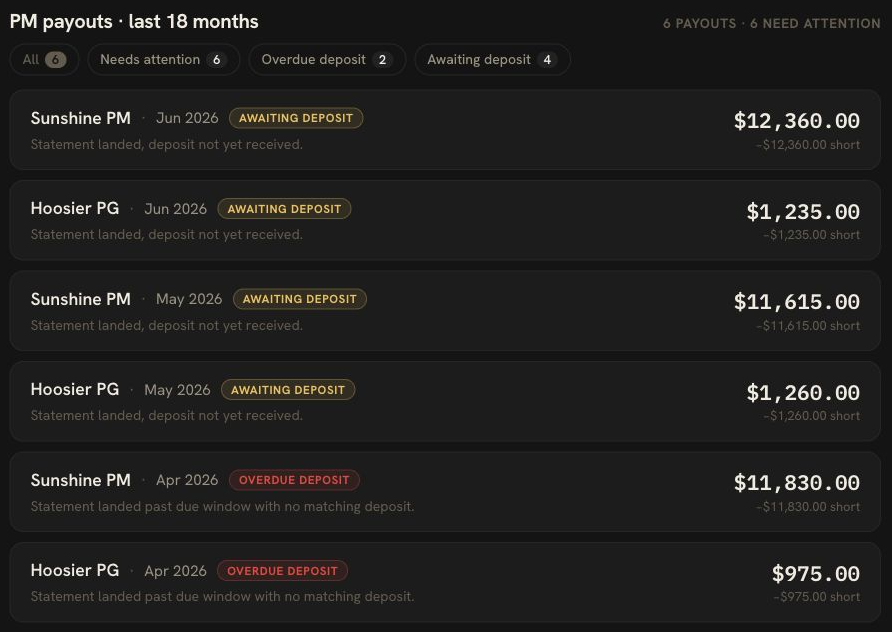
First, PM statements should match the bank. The owner statement says the payout was $2,740. The bank should show what landed, when it landed, and whether one deposit covered one property or several.
Second, repair charges should have backup. A maintenance line without an invoice is not proof. It is a number wearing a hat.
Third, loans should be current. Your LTV, DSCR, payment split, escrow balance, and maturity date should come from the actual mortgage record, not the number you remember from the last refinance.
Fourth, insurance should be tracked as a portfolio cost. A renewal that adds $900 a year can erase $75 a month of cash flow. That is one small line until it repeats across five doors.
Fifth, documents should be findable in seconds. Closing disclosures, leases, PM agreements, inspection reports, appraisals, tax bills, insurance declarations, and owner statements do not belong in seven inbox searches.
Sixth, tax categories should be clean all year. March is a terrible month to discover that principal, interest, escrow, repairs, and capital improvements have been living in one mystery column.
This is why the door 3 problem is bigger than “get organized.”
“I’ll clean it up when I have more time.”
Sure.
The third property is famous for creating more free time. Everyone knows that.
DoorVault turns the owner record into the operating system
DoorVault is built for the investor who uses property managers and still needs the asset side to be true.
Forward any property email, upload a file, or sync a folder. Knox reads the PM statement, invoice, closing packet, insurance renewal, mortgage statement, lease, tax bill, or inspection report. It files the document to the right property, proposes the bookkeeping, and keeps the evidence attached.
Then the boring part gets useful.
PM payout reconciliation checks the statement against the bank. The portfolio view shows value, debt, equity, rent, LTV, and cash on cash across properties. The loan view keeps principal, interest, escrow, maturity, and refinance math from drifting. Reports Hub turns the records into monthly P&L and tax ready exports. Property Health Scores and Today surface what needs a decision before it becomes a quarterly surprise.
Manual PM statement reconciliation takes 30 to 60 minutes. DoorVault turns that into about 2 minutes of review.
Setting up a new property by hand can take 1 to 2 hours. A closing document can get Knox most of the way there in about 2 minutes.
Across a 10 property portfolio, the manual admin load is about 215 hours a year. DoorVault cuts that to about 5 hours of review.
That is the whole pitch.
Not louder dashboards. Fewer mystery numbers.
For owners using PM portals, DoorVault Connect also pulls owner portal data from supported managers when the owner requests a sync. For the broader platform view, see DoorVault features.
The question before the next offer
Buying the next rental is fun.
Finding out later that the first two were not producing what the spreadsheet said is less fun. A little rustic, if you enjoy preventable pain.
Before door 3, ask one question:
Could a stranger open your records today and prove the cash flow, equity, debt, insurance, PM payouts, and tax categories on property one and two?
If yes, you are scaling.
If no, you are adding doors to a filing problem.
DoorVault exists for that moment. The property manager runs the property. Knox runs the asset record behind it.
Start at https://doorvault.app