Tax Day Special: How Long Did Your Schedule E Take? (It Should Take 60 Seconds)
Today is April 15. If you are a landlord, one of two things just happened. You either filed your return weeks ago because your records were organized and...
Rental property taxes are not complicated because the rules are hard. They are complicated because the data is scattered. Every deduction requires a receipt or a record. Every property needs its own Schedule E. Every LLC files differently depending on how it is structured. And your CPA cannot help you if the information you hand them is a shoe box of bank statements and a spreadsheet with half the columns blank.
The investors who pay the least in taxes are not the ones gaming the system. They are the ones who track every deductible expense in real time, categorize transactions correctly as they happen, split mortgage payments into principal, interest, escrow, and insurance from day one, and hand their CPA a clean export instead of a pile of PDFs.
These posts cover the practical mechanics of rental property tax prep: how to fill out Schedule E line by line, which deductions most landlords miss, how depreciation works (and what happens when you sell), how to collaborate with your CPA without the back-and-forth spreadsheet email chain, and how to set up your bookkeeping so April is a one-click export instead of a weekend project.
Read the Tax Preparation pillar guideToday is April 15. If you are a landlord, one of two things just happened. You either filed your return weeks ago because your records were organized and...
It is April 14. Your Schedule E is due tomorrow. Your CPA sent you a "final list of questions" three days ago and you have been dodging it. There are...
Tax Day 2026 is here. If your Schedule E preparation took more than 60 seconds per property, your system is the problem, not the IRS form.

Today is April 15. If you are a landlord, one of two things just happened. You either filed your return weeks ago because your records were organized and your CPA had everything they needed by Februa

It is April 14. Your Schedule E is due tomorrow. Your CPA sent you a "final list of questions" three days ago and you have been dodging it. There are receipts in your email. Receipts in a folder on yo

Tax Day 2026 is here. If your Schedule E preparation took more than 60 seconds per property, your system is the problem, not the IRS form.

The IRS gives you a 27.5 year depreciation deduction on every rental. Most investors leave money on the table because they track it wrong.

Your mortgage payment has four components and each one goes on a different line of Schedule E. Most landlords get this wrong. Here is the right way.

Your CPA does not hate your properties. They hate your records. Here is exactly what they need and how to deliver it automatically.
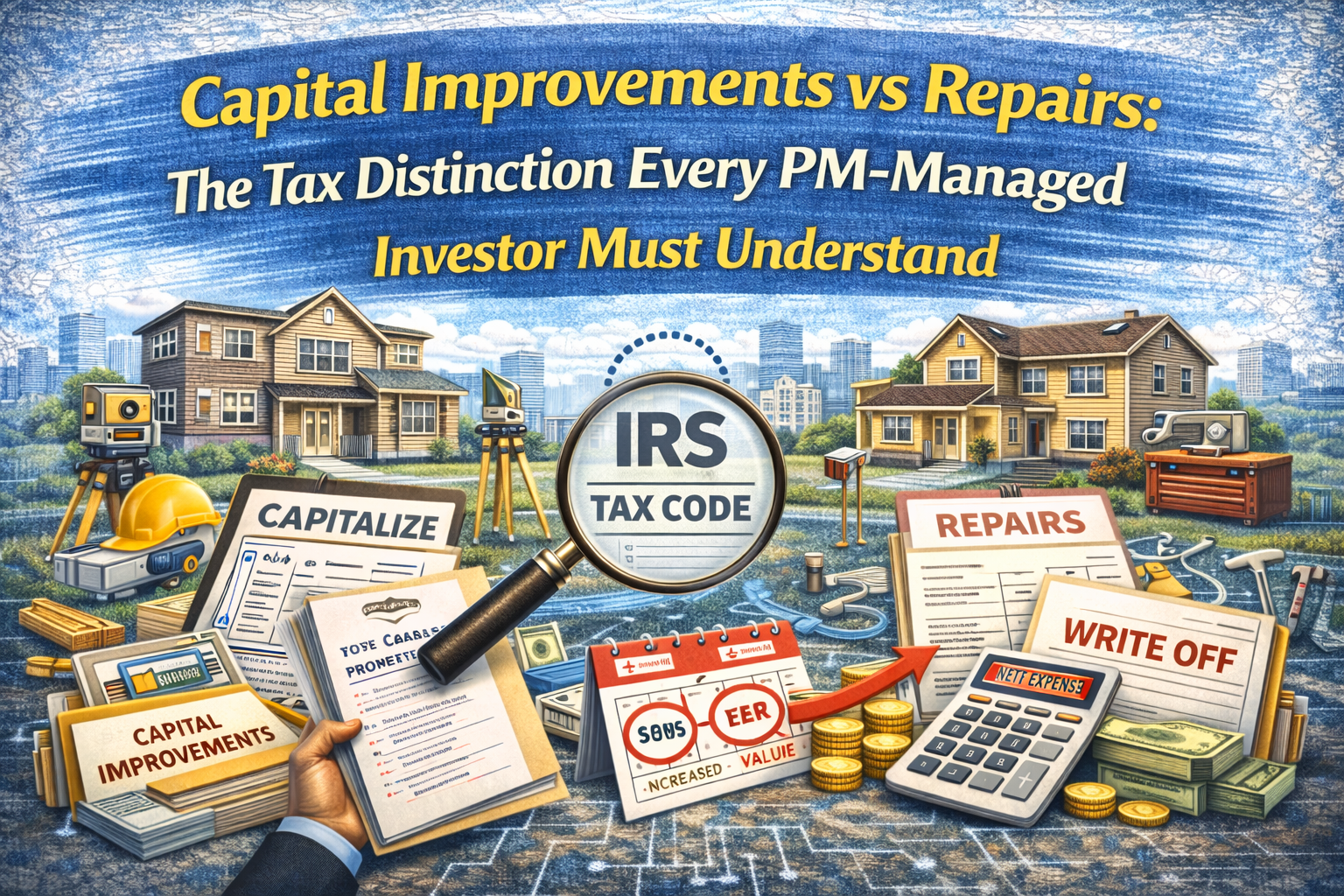
Repair or capital improvement? Get this wrong and the IRS will notice. The tax distinction every rental investor needs to understand.

Depreciation saves rental investors thousands per year. Here are the strategies PM managed investors should know to maximize every deduction.
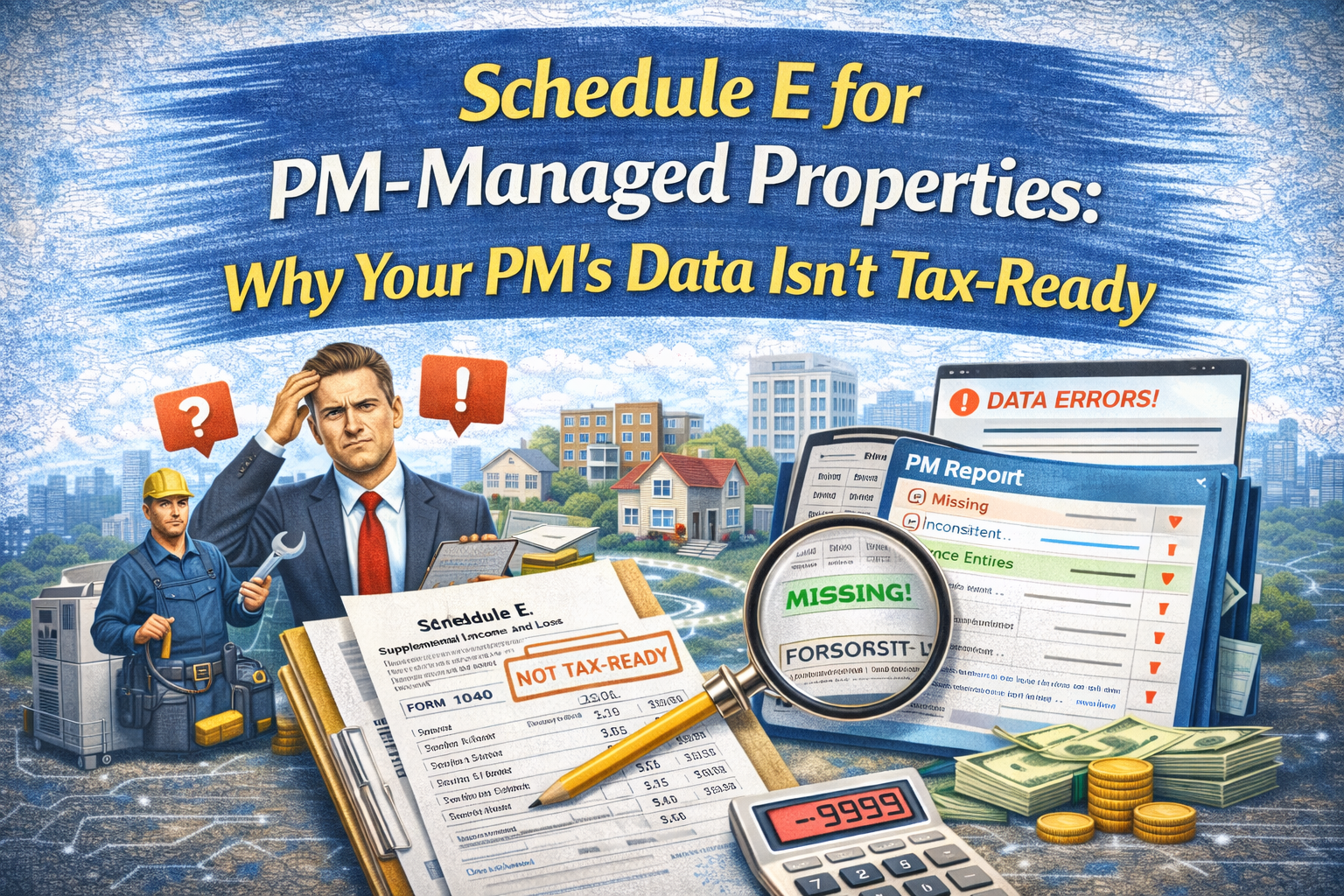
Your PM's data is not tax ready. The gap between what your PM reports and what the IRS wants costs investors thousands in missed deductions.
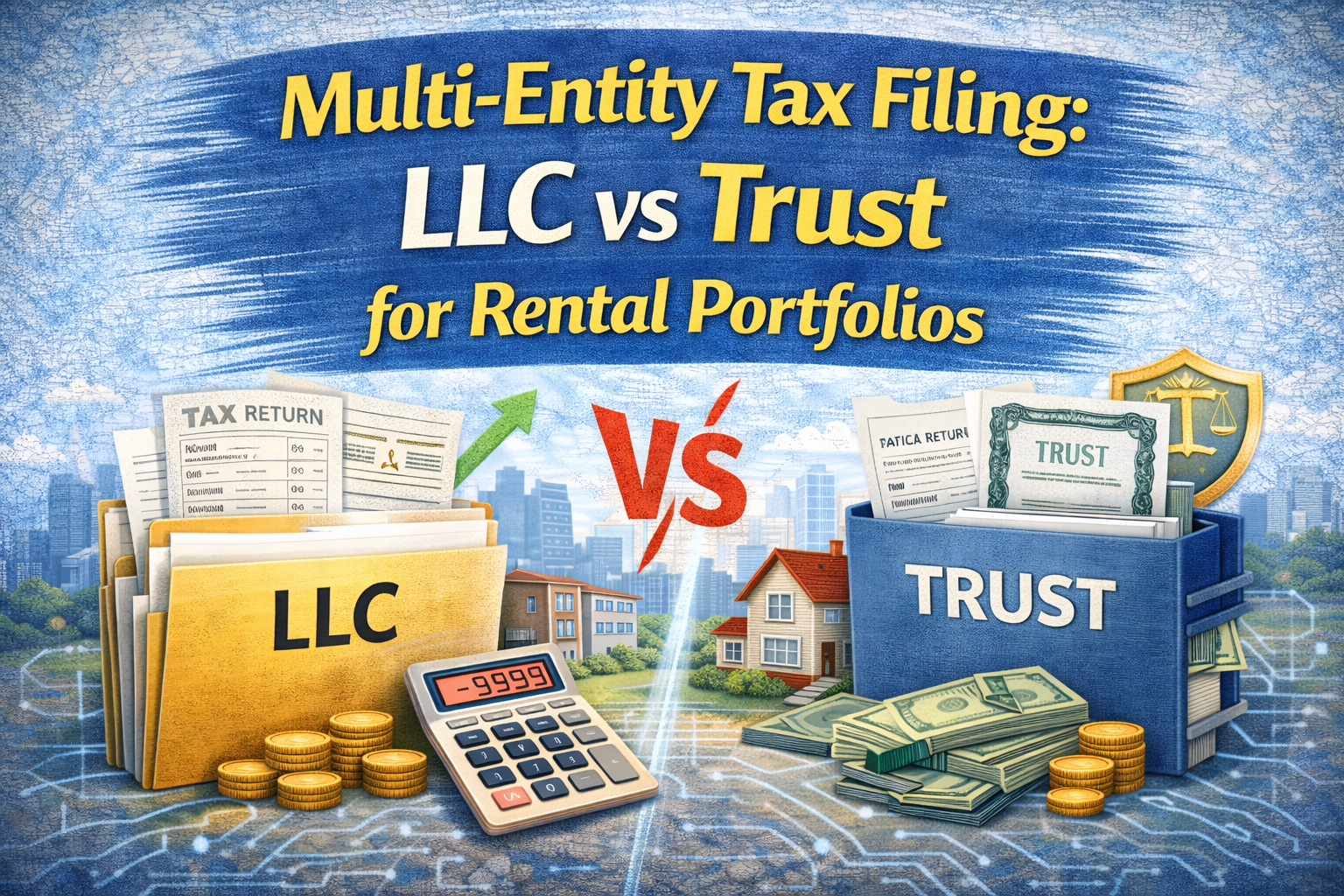
LLC vs Trust for your rental portfolio? The wrong entity structure costs you thousands at tax time. Here is how to choose and track it all.
DoorVault classifies every transaction to the right Schedule E line, splits mortgage payments automatically, and exports a filing packet your CPA will actually thank you for. Free plan included.
Start free