
A rental property analysis spreadsheet can make a bad number look official.
That is the problem.
The formulas can be perfect. The tabs can be beautiful. The cash flow cell can turn green. Then one adjustable loan resets, one PM fee was coded wrong for 6 months, one reserve top up hid a short payout, and the property you thought was fine starts bleeding.
Congratulations. The spreadsheet worked.
It calculated the wrong truth very cleanly.
The spreadsheet is not wrong. The inputs are.
Most rental analysis templates are built around the same core math: rent, vacancy, operating expenses, NOI, debt service, cash flow, cap rate, and cash on cash return.
That math is useful.
It is also the easy part.
The hard part is proving the inputs after the property is already operating through a property manager. Scheduled rent is not collected rent. A PM summary is not a reconciled statement. A portal balance is not a bank deposit. A mortgage payment is not one expense line. It has principal, interest, tax escrow, insurance escrow, and sometimes a reset coming.
If you own 5 rentals across 2 managers, your numbers may live in 2 portals, 5 PM statement formats, 5 loan records, bank deposits, tax bills, insurance renewals, invoices, and a CPA folder you swear you will clean up next weekend.
Very passive. Very elegant. Very fake.
A spreadsheet can add the numbers you type into it. It cannot tell you whether those numbers deserve trust.
A payment reset turns fuzzy NOI into real pain.
The timely part is the debt.
Owners with adjustable rate mortgages resetting in 2026 or 2027 do not have the luxury of vibes. A property that looked acceptable at one payment can become marginal after the reset. The question is not only whether the loan payment goes up. The question is whether the property was actually strong before the payment changed.
If your old monthly debt service was $1,050 and the reset pushes it to $1,375, that is a $325 hit before repairs, vacancy, taxes, insurance, or PM fees move at all.
Now apply that to a property where the real trailing 12 month NOI was already overstated by $180 a month because owner statements were not matched to deposits.
That is not a spreadsheet issue.
That is an input custody issue.
The spreadsheet sees $450 a month of cash flow and says hold.
The bank record, PM statement, insurance renewal, loan reset, and repair trail may say the real answer is $55.
Tiny difference. Only the entire decision.
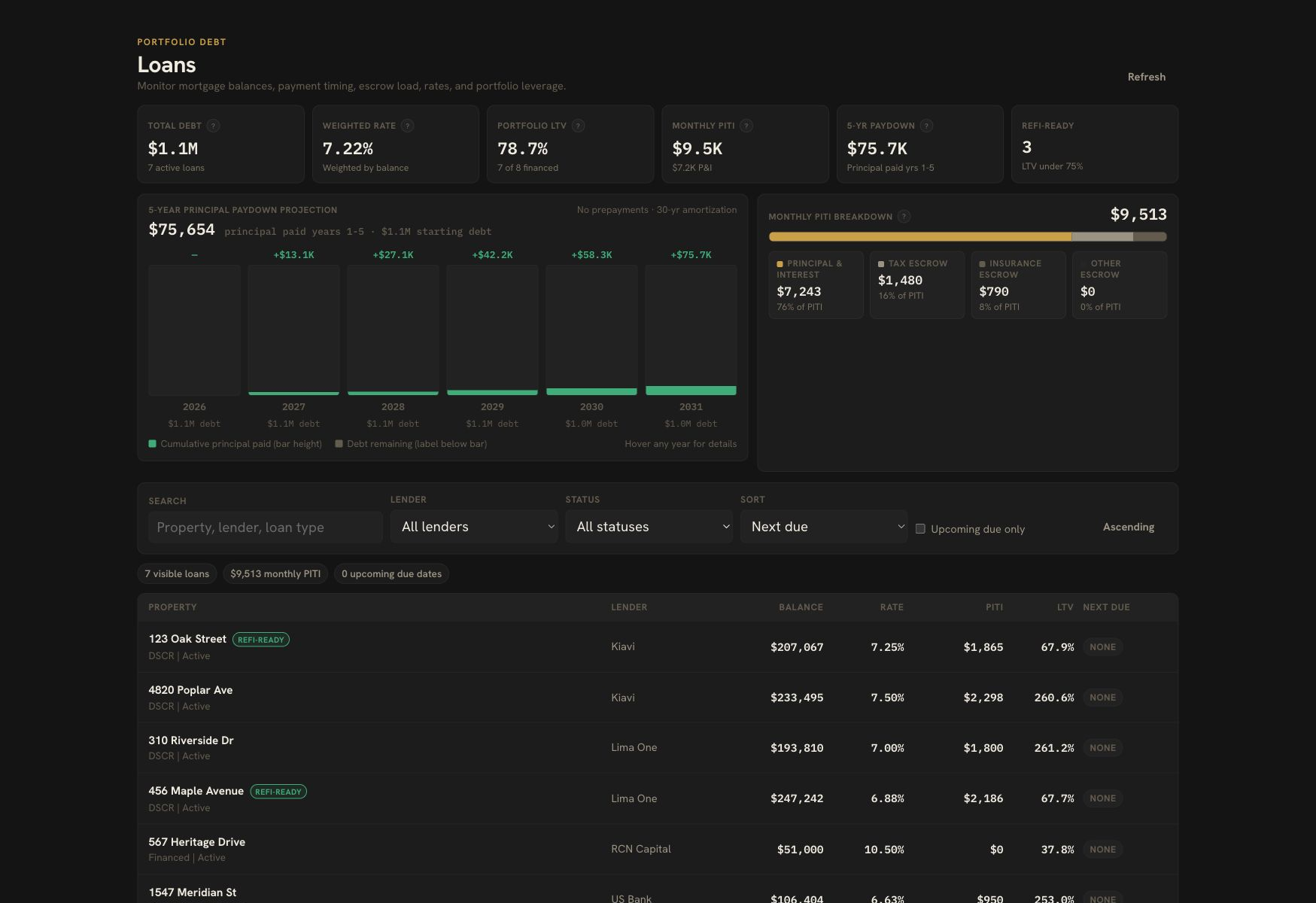
The five numbers to verify before you sell.
Before you decide a property is the weak one, verify 5 numbers.
- Actual collected rent, not scheduled rent.
- PM fees, including leasing fees, renewal fees, portal fees, and repair markups.
- Net payout matched to the bank deposit.
- Trailing 12 month NOI after repairs, reserves, taxes, and insurance.
- Debt service after the reset, refinance, balloon, escrow change, or payoff.
That list sounds basic because it is.
That is why it gets skipped.
Most owners jump straight into the spreadsheet because the template feels productive. Type in rent. Type in expenses. Type in rate. Watch the output change.
The adult move is slower.
Pull the PM statements. Match each owner payout to the bank. Split the mortgage payment correctly. Confirm the insurance renewal. Check the tax bill. Separate one time repairs from recurring maintenance. Then rerun the cash flow.
If the property still fails, fine.
At least now it failed with evidence.
DoorVault proves the inputs before the math.
DoorVault is built for the investor side of this exact decision.
Forward any property related email to Knox. Upload PM statements, mortgage statements, insurance renewals, tax bills, closing docs, leases, and invoices. Sync the folder where your documents already land. Knox reads the files, files them to the right property, extracts the data, proposes the transactions, and ties the proof back to the portfolio record.
With Trust Knox off, changes wait for review. With Trust Knox on, clean routine matches can move faster. Either way, the Activity Log keeps the before and after record.
That matters because sell versus hold math is only as good as the evidence behind it.
DoorVault gives you the owner side record: PM statement processing, bank reconciliation, Portfolio Dashboard, per property P&L, Loans Dashboard, Equity Tracker, Sell vs Hold Analysis, Schedule E export, entity reporting, property health scores, anomaly detection, Document Vault, CPA Portal, and Section 8 compliance.
The spreadsheet is one view.
The asset record is the thing underneath it.
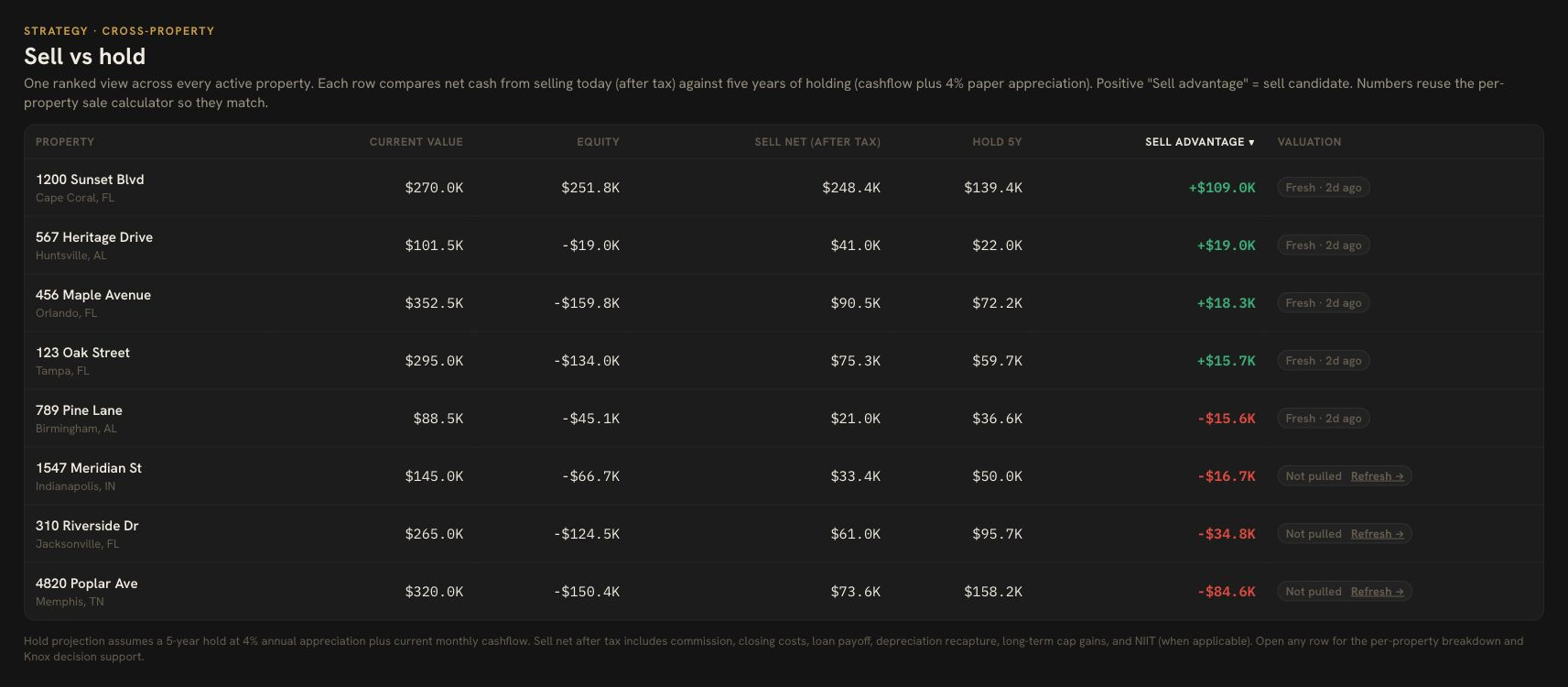
The loser is not always the ugly property.
The property to sell is not always the one with the annoying tenant, the oldest roof, or the PM who sends the ugliest statement.
Sometimes the weak property is the one with decent rent but a reset date hiding in the loan file.
Sometimes it is the one with clean gross income and a slow maintenance leak.
Sometimes it is the one where $125 a month of quiet fees turned a good looking return into a lazy capital trap.
This is why the hold versus sell call belongs above the PM portal and above the spreadsheet. The PM runs the property. The owner still has to run the asset.
Use the spreadsheet if you want.
Just do not let it pick the loser until the numbers underneath it have been cleaned.
If you want the deeper sale decision version, read Should You Sell Your Rental Property at a Loss? Know NOI First. If the problem starts with PM statements, start with How to Reconcile an Owner Statement When You Use a Property Manager. For debt visibility, see Rental Property Loans Dashboard: How to See Every Mortgage, LTV, and Debt Paydown in One View.
Start free. 2 properties. No credit card. https://doorvault.app
Sources
Current market and template context came from rental cash flow and ARM reset planning guides, plus the live SERP for rental property analysis spreadsheets. The pattern is consistent: templates explain the math, but the owner still has to prove the inputs.