
How to choose a property manager is not a 10 percent question.
That is the easy number. The hard number is what you stop seeing after you hand the keys to someone else.
Your property manager runs the property. Leasing, rent collection, repairs, tenant calls, notices, inspections. Great. That is why you hired them.
But you still own the asset.
So the real question is not, can this manager handle tenants?
The real question is, can you still prove the money, the repairs, the reserve, the documents, and the owner decisions every month without becoming the unpaid accounting department?
The 10 percent fee is the easy number
Most owners compare property managers by the fee first.
Eight percent. Ten percent. Half a month leasing fee. Renewal fee. Maintenance markup. Vacancy fee. Technology fee. Very official. Very spreadsheet friendly.
The fee matters, but it is only half the trade.
The other half is visibility.
If one manager charges 8 percent and sends a vague owner statement on the 20th, and another charges 10 percent with line item detail, invoice backup, reserve movement, a clean payout date, and a written approval rule, the cheaper manager may be the expensive one.
That is the part nobody puts in the sales call.
The fee tells you what the manager costs.
The monthly packet tells you what the manager lets you see.
One is pricing. The other is control.
The sample owner statement is the interview
Ask for a sample owner statement before you sign.
Not the marketing portal. Not the polished dashboard screenshot. The actual monthly packet an owner receives after rent is collected and bills are paid.
You are looking for 6 pieces.
- Rent collected by property.
- PM fees and leasing fees.
- Maintenance charges with invoice backup.
- Reserve beginning balance, draws, top ups, and ending balance.
- Net owner payout.
- Items waiting on your approval.
If the statement cannot show those 6 pieces, you already know what month one will feel like.
It will feel like email.
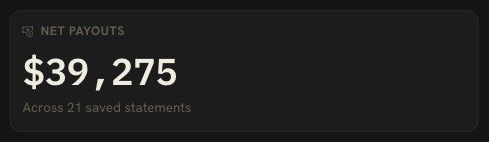
DoorVault keeps PM statement totals visible across saved statements, so payout patterns stop living inside one PDF at a time.
The sample statement is not paperwork. It is the interview.
The repair threshold is where trust gets expensive
The repair approval threshold is the most boring clause in the agreement.
Which is why it matters.
A $300 threshold and a $750 threshold create two very different owner experiences. One means you see more decisions. The other means the manager can move faster, but you need cleaner invoice backup and better statement detail.
Neither number is automatically right.
The bad setup is the one where nobody can explain what happens after the threshold is crossed.
Ask these questions before signing.
What amount requires written owner approval?
What counts as an emergency?
Do vendor invoices come with the monthly statement?
Does the manager use in house maintenance, outside vendors, or both?
Are markups shown as separate lines?
How are repeats handled when the same issue comes back 30 days later?
“Just trust us” is not a process.
Trust is fine. Proof is cheaper.
The monthly close still belongs to the owner
A good property manager can remove the daily work.
They cannot remove ownership.
Every month still has to close. Rent either landed or it did not. The bank deposit either matches the statement or it does not. The reserve either moved for a reason or it became a fog machine. Repairs either have invoice backup or they are vibes with a dollar sign.
The owner close has 5 records.
The PM statement.
The bank deposit.
The repair invoice.
The reserve history.
The decision trail.
If those 5 records agree, you have a month you can trust. If they do not, you have a question to ask while the month is still fresh.
Waiting until tax season is how a $50 gap turns into a 19 email archaeology project.
Very passive. Extremely relaxing.
DoorVault turns the packet into an asset record
DoorVault is built for the owner who uses property managers.
Forward any property related email to Knox. Upload the owner statement, invoice, lease, insurance renewal, closing disclosure, inspection report, mortgage statement, or tax bill. Connect supported PM portal data when available. Knox reads the records, files them to the right property, proposes the bookkeeping, and keeps the proof attached.
Then the asset record can do its job.
PM versus Bank Reconciliation compares the expected owner payout with the actual deposit. Action Center keeps the owner question visible until it is resolved. The Document Vault stores the packet. Reports Hub turns the clean records into per property profit and loss. Loans Dashboard keeps debt and escrow context next to the property. Schedule E export gives the CPA the right categories. Entity Management keeps LLC records clean. Section 8 compliance, BRRR tracking, equity, insurance, and sell versus hold math all sit on top of the same owner record.
Not 9 workflows.
One asset record.
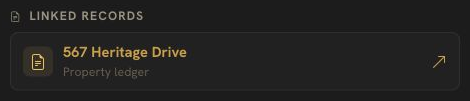
When a PM question has linked records, the owner is not arguing from memory. The statement, document, property, and decision trail sit together.
That is the difference between hiring a manager and losing visibility.
Pick the PM. Keep the proof.
Use a property manager if the math works.
For remote owners, busy operators, Section 8 investors, and anyone scaling past the point where tenant calls become a second job, a good manager can be worth the fee.
But do not buy the fee and forget the packet.
Before you sign, ask for the sample owner statement. Ask for the repair approval threshold. Ask for invoice backup. Ask how reserve movements show up. Ask what the owner portal will and will not show. Ask how fast the monthly packet arrives. Ask what happens when the payout does not match the bank.
If they can answer plainly, good.
If they cannot, the 10 percent fee was not the problem.
The visibility trade was.
DoorVault keeps the owner side clean after the PM does the daily work. PM statements, bank deposits, documents, loans, taxes, entities, Section 8 records, and portfolio decisions all live in one place.
See how DoorVault keeps the asset record clean at https://doorvault.app