
More LLCs should not make your portfolio harder to see.
Yet that is what usually happens. One entity gets one bank account. Then one property manager sends a statement. Then another entity gets a loan renewal, an insurance declaration, and six invoices in three inboxes.
The legal structure may be fine. The operating record is where things get ugly.
Rental property LLC accounting is not about collecting more spreadsheets. It is about keeping each entity clean while still seeing what the whole portfolio is doing. The owner needs a decision record, not a pile of tabs with optimistic names.
Four records beat four spreadsheets
An LLC is not a filing cabinet. It is a real operating boundary with a property, bank activity, documents, obligations, and decisions tied to it.
For each entity, an owner needs four things to agree:
- The property and entity assignment.
- The source documents, including PM statements, invoices, insurance records, and loan notices.
- The actual bank movement.
- The entity level report that rolls up into the portfolio view.
Miss one and you get the usual answer to a simple question like, “How did LLC two perform last month?” Somebody opens Excel and starts guessing.
That is not a reporting process. That is a scavenger hunt with a tax deadline.
The property manager statement is not the final record
A PM statement is an input. It is not proof that the distribution arrived, that every charge belongs to the right property, or that the entity record is current.
Start by routing the statement to the right property and entity. Then keep the supporting invoices, reserve changes, maintenance charges, lease records, and disbursement together. When the bank deposit lands, match it to the reported net disbursement.
That one check catches the problem most entity spreadsheets hide. The statement says one number. The bank says another. The spreadsheet says whatever was typed last month.
DoorVault gives owners a record that connects the statement, source documents, transactions, and bank reconciliation instead of storing them as four unrelated chores. Knox can read incoming real estate documents, pull out the usable data, and keep the original record available for review. The owner still decides what is right. Yeah, that is the point.
That record also makes the next conversation better. A CPA can see the source document behind an expense. A lender package starts with records that already agree. An owner can ask why a reserve changed without digging through a former employee’s inbox. The work is boring right up until the day it saves a decision.
Consolidated does not mean mixed together
Owners need two views at once.
The first view is narrow. What happened inside this entity? Income, expenses, loan activity, documents, and open exceptions should stay tied to the correct asset record.
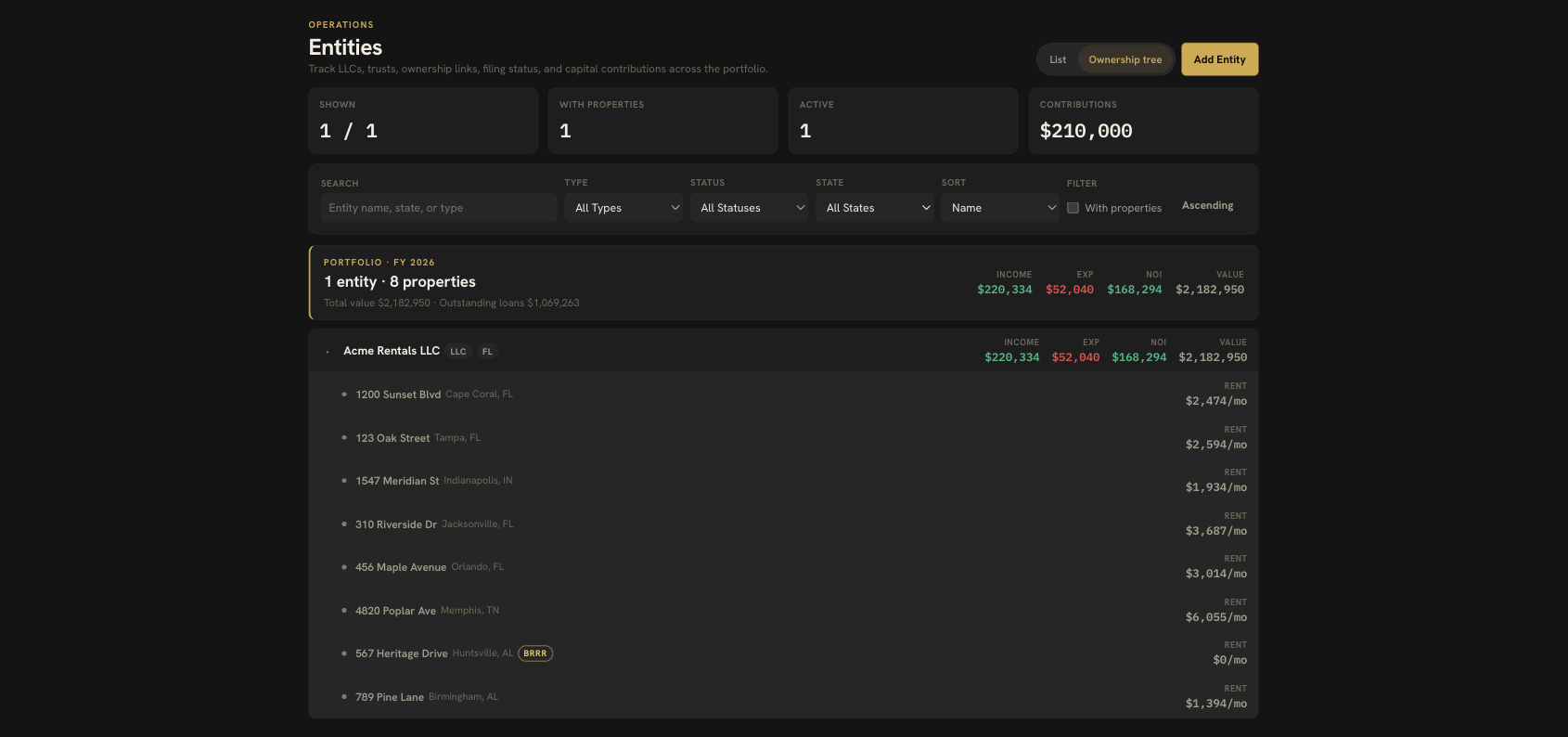
The second view is wide. What is the portfolio doing across every entity and property manager? Total NOI, cash flow, debt, equity, and which property needs a decision.
Those views should connect without turning every LLC into an untraceable bucket. The category gets this backward all the time. It offers a portfolio total and calls it visibility. A total without the records underneath it is just a nicer looking shrug.
DoorVault is built for the owner side. It keeps entity context in the property record while bringing the portfolio view together. The same operating system can handle PM statements, bank feeds, documents, loans, insurance dates, portfolio performance, and the report your CPA actually needs. Boring. Useful. Expensive to rebuild in March.
Use the monthly review to find the missing link
The monthly review does not need to take a weekend. It needs a fixed order.
First, check that new documents and PM statements landed in the correct entity record. Second, reconcile the bank movement against the PM distribution. Third, scan entity level exceptions such as missing documents, unreviewed transactions, or a change in fees. Fourth, lift to the consolidated portfolio view and decide what needs attention.
Four steps. One owner record. No heroic spreadsheet merge at 11:40 p.m.
The key is cadence, not heroics. A five minute review after the statement and deposit arrive costs less than rebuilding a quarter of activity when a lender, CPA, or partner asks for the answer. The month is still fresh. The document trail is still there. The entity line is still clear.
If an entity has different ownership, tax treatment, or legal obligations, take that question to your CPA and attorney. The system should make their work easier by preserving the record, not pretend that a dashboard replaces professional advice.
Your entities should make decisions clearer
The goal is not to have more LLCs. The goal is to run the assets inside them without losing the thread.
Forward any real estate email, upload a file, or sync a folder. DoorVault keeps the document trail, transaction context, bank reconciliation, and portfolio view connected so you can see the problem before it becomes another year end reconstruction.